Design in 2026:
How AI, Automation, and Human Creativity Are Reshaping Graphic Design
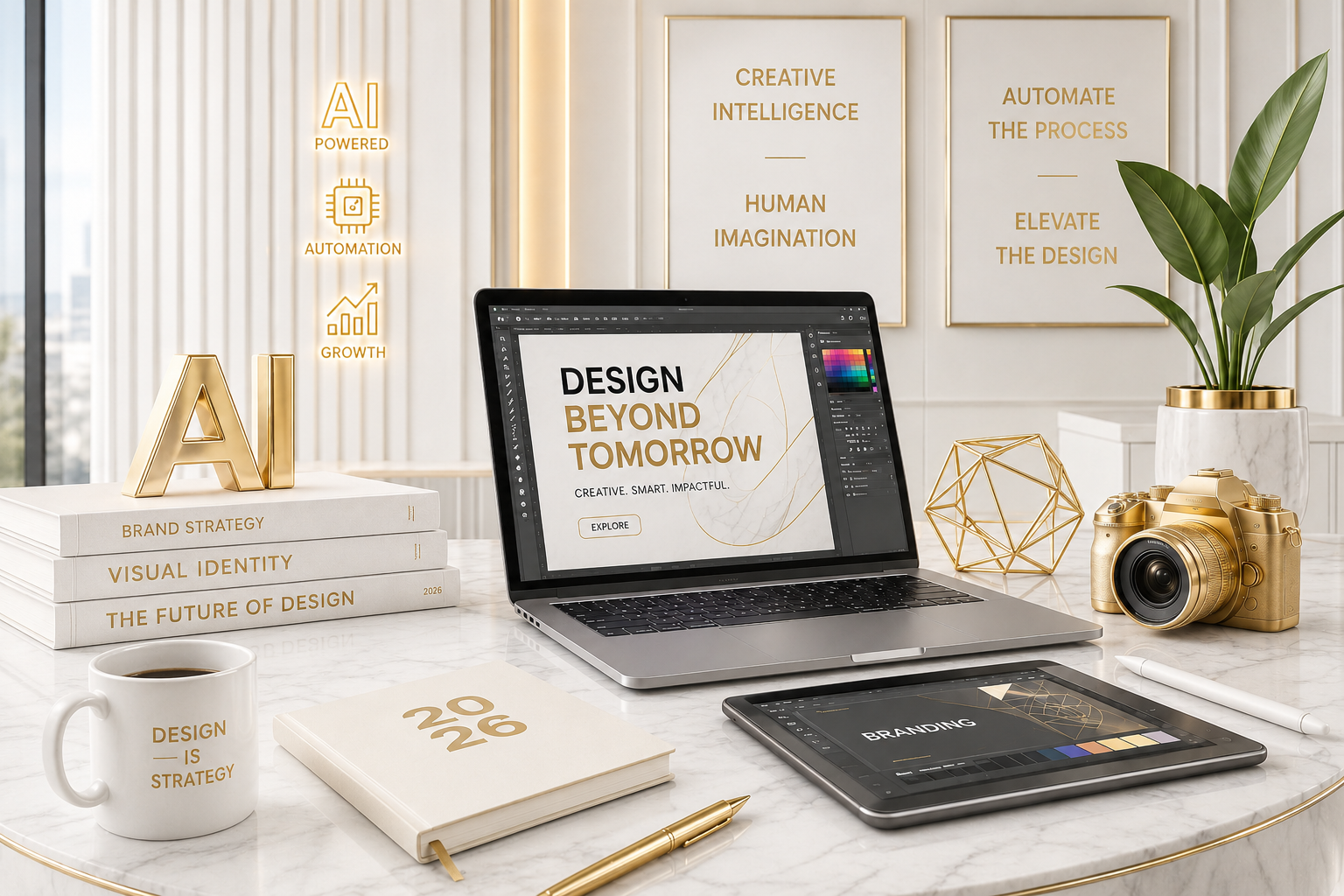
Why modern designers are no longer just creators—but systems thinkers, brand builders, and AI collaborators
The graphic design industry in 2026 looks nothing like it did just a few years ago. What was once a field centered mainly on software skills and visual creativity has evolved into something much more complex—an ecosystem where design, technology, and automation all intersect.
One of the biggest shifts shaping the industry right now is the rise of AI-assisted design workflows. Tools powered by artificial intelligence are no longer just experimental—they are actively embedded into daily creative processes. Designers are now using AI to generate concepts, create variations of layouts, and even assist with typography and composition decisions. However, instead of replacing designers, AI has changed what it means to be one. The value is shifting from manual execution to creative direction, problem-solving, and system-building.
Another major trend is the growing demand for scalable design systems. Companies are no longer satisfied with one-off visuals. They want entire ecosystems—brand identity systems, reusable templates, and automated content pipelines that can produce consistent output across social media, print, and digital platforms. This is where designers who understand both branding and workflow automation are standing out. The ability to build a system once and deploy it across hundreds of assets is becoming a highly valued skill.
Email design is also experiencing a quiet but powerful evolution. In 2026, email marketing is far from outdated. In fact, it has become one of the most optimized forms of digital communication. Designers are now expected to create responsive, conversion-driven email experiences that integrate seamlessly with automation platforms like Klaviyo and Mailchimp. It’s no longer just about making emails look good—it’s about designing journeys that guide user behavior.
At the same time, there is a growing conversation around “authentic design” in an AI-heavy world. As tools become faster and more automated, audiences are becoming more sensitive to content that feels generic or overly generated. This has pushed designers to lean more heavily into storytelling, brand personality, and emotional resonance. The most successful work today is not the fastest or most automated—it’s the most intentional.
Looking ahead, the role of a graphic designer continues to expand. Designers are now expected to understand not just composition and color theory, but also systems thinking, automation tools, and cross-platform strategy. The industry is no longer asking “Can you design this?” but rather “Can you design a system that scales this?”
In this new landscape, the strongest designers are the ones who adapt quickly, learn continuously, and embrace tools without losing their creative voice. Graphic design in 2026 is not about choosing between human creativity and artificial intelligence—it’s about learning how to combine both effectively.
The future of design belongs to those who can think beyond the screen.